

Blo
Explore the Trizzlog
History, ideas, and other stuff we have to say about Trizzle.

The math behind the madness
Why 8 pieces make in 40,320 possible sequences – and what that means for you.
The first 4×4×4 Trizzle Cube (Model No. 1) has 8 pieces. If you tried every possible order by pure guesswork, you’d face 8! (that’s 40,320) possible sequences. Add in the ways pieces can be connected and oriented, and you‘re looking at roughly 229,452,716,202,394,000 possibilities. Even if you spent your entire 100-year lifespan doing nothing but trizzling, you’d have to test over 72 million possibilities per second.
So yes – a pinch of logic might be a good idea if you want to solve more than one Trizzle in your life.

Encouraging results
The patent research came back … encouraging. Sure, there are other 3D puzzles out there, but as it turns out, no one had ever focused on gravity as the central stabilizing principle.
That was the moment Trizzle truly took shape – a design playground where logic, geometry, and physics can all play nicely together (well, most of the time).
More sketches, prototypes, and head-scratching sessions followed. But the key idea remained the same: A puzzle where gravity is either the problem or the solution.
How gravity gave birth to trizzle
It all started during a jog.
Somewhere between kilometre three and a wandering thought, a scene from an interior design project popped into my head – a slanted roof that someone had forgotten to support properly. Suddenly, in my imagination, something started tp slide down the slope. Why? Of course – gravity!
I started thinking: how could you stop something from sliding, without glue, screws, or any external support? And then it hit me – what if gravity itself could be part of the solution?
That spark became the seed of an idea:
A puzzle held together only by gravity.
Or more precisely: a puzzle designed to be held together by gravity.
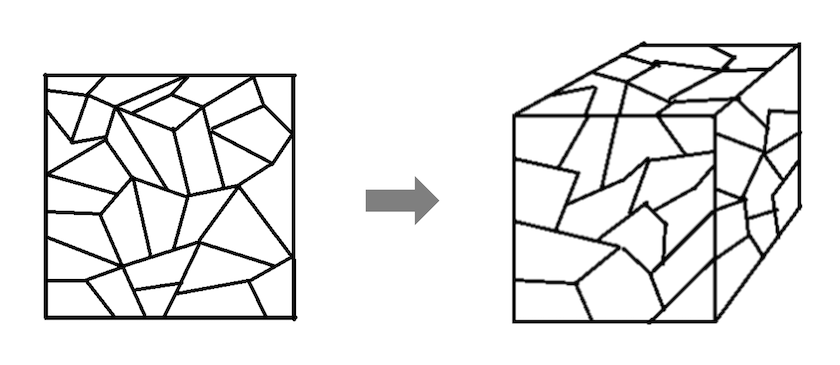
Back home, I sketched my first draft – a simple two-dimensional picture of the side wall of a cube It looked … promising. So – I drew a slightly more complex 3D version of the cube – and still found it interesting.
While jogging the next day, my brain wouldn’t let go of it. New shapes, clever configurations, even some surprisingly deep mathematical questions started appearing in my mind.
I decided to take the idea seriously – and protect it. That’s when I reached out to Max Holsten at Michalski Hüttermann Patent Attorneys. He liked the concept right away and began a thorough patent search.
Hi
I’m Kai, the creator of the Trizzle
When I was younger, I loved to play with Rubik’s Cubes and its spinoffs. Ten years later on my first PC, I became (slightly) addicted to Tetris – at least I assume so, as I sometimes dreamt of falling Tetris pieces and rotated them perfectly before drifting into deeper REM phases again.
That’s why I immediately fell in love with the idea of a 3D puzzle held together only by gravity. I continue to enjoy designing new Trizzles and developing additional ideas to make the world of Trizzle as interesting as possible. For anyone who loves using their brains (and “natural intelligence”) to solve puzzle in a new dimension.